
• LinkedIn
  • Twitter
  • Google+
.
|
TechRecs: Cool Tools & Hot Topics
|
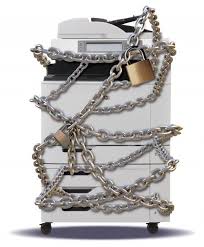
Is Your Printer Your Weak Security Link?
Posted on August 9, 2017 by

When you think about where security threats are within the office, you probably think immediately about your computers or maybe personal phones used by employees. However, your office printer has presented security risks for decades.

“Since the inception of LaserJet printers in the late 1980s, the printers have faced security issues,” explained Ashish Malpani, director of embedded solutions product marketing at HID Global, a manufacturer of secure identity solutions. “However, with the advent of networking, the networked printers along with embedded web servers and vulnerabilities in PostScript processing, printer security got attention in the late 1990s.”

When printers then morphed into the multi-function machines they are today, it expanded the possible attack vector. Today, the printer may be the most vulnerable piece of equipment in the office; yet, it often gets less security attention or protection than other devices accessing the network.

This can open the company to serious security problems, according to Jason Rader, national practice director of security services at Datalink, an Insight company. “Given their storage capabilities, printers also contain enormous (and often sensitive) data, which includes every document that’s been printed or sent via that printer,” he said. In addition, because printers are connected to company emails, a hacker can gain access to the information and email it to him or herself.

Specific security risks

Printers are risky because IT staffers aren’t taking the necessary steps to protect them or the data accessed through them. One of the most critical moves – changing the default password to something strong and unique – is too often never taken. Ignoring that simple step gives almost anyone access to the printer. Malpani added that modern multifunction printers (MFPs) face a range of threats and vulnerabilities, including the following:

  • Unauthorized access to print data – Someone walks over to the printer and accesses documents that belong to someone else.
  • Unauthorized configuration changes: Someone changes the printer configuration to route the print jobs.
  • Print job manipulation: This includes replacing the print content for others, inserting new content in the print jobs, and deleting logs to interfere with repudiation.
  • Print data disclosure: This includes accessing the print data from the memory, file system, print jobs and hard drives when printers are decommissioned.
  • Printer as an attack point: A compromised printer can be used to attack other applications, execute arbitrary malicious code or attack other systems (e.g., to launch a denial-of-service attack on the printer or network).
  • Cloud printing risks: The inherent risk in cloud printing is that the print job is rendered on public infrastructure and sent to the printer using something like PostScript. This approach is susceptible to middleman attacks or someone trying to gain access to the enterprise network through cloud printing channels.

Wireless printing opens up even more access points for attackers. “With Wi-Fi, an attacker can carry out proximity attacks like getting the printer to connect to a malicious network and then execute harmful code, etc., while being outside of the walls,” Malpani said.

Best practices to protect the printer

Protecting your printer from threats isn’t much different from protecting any other device on the network. It begins with basic steps such as making sure to secure your printer (not just your server), patching general vulnerabilities via updates to your printer’s operating system, changing passwords regularly, turning on authentication, and turning off services that are not being used.

Don’t ignore the employee connection to printer security. “It is critical to include printer security in the security policy and employee training,” said Malpani.

Office printers are set up for convenience, access and full control within the walls of the office. However, more and more often, these devices can be accessed from outside the walls of the enterprise, sometimes by the company so it can print remotely, sometimes by the vendor or partners doing proactive maintenance, and often by the suppliers who need to know when to bring more toner, said Chris Roberts, chief security architect at Acalvio, a provider of advanced threat detection and defense solutions.

“Each of these is an attack vector into a device that very much has all of your secrets in one place.”

For more information on solutions for running your businesses’ technology more efficiently, visit our website or contact Megan Meisner at mmeisner@launchpadonline.com or 813 448-7100 x210.

This was originally posted by Business News Daily. 

Posted in TechRecs: Cool Tools & Hot Topics, Small Business IT Management, Small Business Web Strategies, IT Solutions - Stay Secure
Conference Attendees Can Make Lasting Connections with Topi
New Password Guidelines Make Your Accounts Easier to Secure

Related Posts

  • What Is Patch Tuesday? Microsoft’s Monthly Update Explained

    On the second Tuesday of each month, Microsoft and other tech companies release patches for
    read more
  • 10 Ways to Save Time on Your Windows 11 PC

    Windows 11 packs many features that you can use to speed up your tasks and
    read more
  • How to Automatically Fix Column Width to Fit Your Data in Excel

    There are numerous ways to change column widths in Excel, but did you know you
    read more
  • Why I Use a Privacy Screen When Working in Public

    Privacy screens are an affordable way to protect yourself from nosy colleagues and strangers whilst
    read more
Logging In...

Profile cancel

Sign in with Twitter Sign in with Facebook
or

Not published

TO WEBSITE >>
launchpadonline.com

CATEGORIES

  • Launch Pad News
  • TechRecs: Cool Tools & Hot Topics
  • Small Business IT Management
  • Small Business Web Strategies
  • IT Solutions – Cloud | Mobile
  • IT Solutions – Stay Secure
  • ITs Easy Being Green
  • RevITup TechCare Client Forum
  • GreenBack Nonprofit Wish List
  • Launch Pad Franchise Forum
  • Launch Pad Partner News

Cloud Computing in Plain English

Copyright © 2026 | Privacy Policy
  • LinkedIn
  • Twitter
  • Google+

Archives

  • January 2025 (1)
  • December 2024 (3)
  • November 2024 (4)
  • October 2024 (2)
  • September 2024 (4)
  • August 2024 (3)
  • July 2024 (2)
  • June 2024 (1)
  • May 2024 (3)
  • April 2024 (4)
  • March 2024 (2)
  • February 2024 (3)
  • January 2024 (4)
  • December 2023 (3)
  • November 2023 (3)
  • October 2023 (3)
  • September 2023 (3)
  • August 2023 (5)
  • July 2023 (3)
  • June 2023 (5)
  • May 2023 (4)
  • April 2023 (3)
  • March 2023 (4)
  • February 2023 (3)
  • January 2023 (3)
  • December 2022 (2)
  • November 2022 (2)
  • October 2022 (2)
  • September 2022 (3)
  • August 2022 (3)
  • July 2022 (2)
  • June 2022 (3)
  • May 2022 (2)
  • April 2022 (2)
  • March 2022 (2)
  • February 2022 (3)
  • January 2022 (2)
  • December 2021 (2)
  • November 2021 (3)
  • October 2021 (3)
  • September 2021 (3)
  • August 2021 (3)
  • July 2021 (2)
  • June 2021 (4)
  • May 2021 (3)
  • April 2021 (2)
  • March 2021 (2)
  • February 2021 (3)
  • January 2021 (2)
  • December 2020 (2)
  • November 2020 (2)
  • October 2020 (4)
  • September 2020 (2)
  • August 2020 (3)
  • July 2020 (2)
  • June 2020 (3)
  • May 2020 (2)
  • April 2020 (3)
  • March 2020 (3)
  • February 2020 (3)
  • January 2020 (4)
  • December 2019 (3)
  • November 2019 (2)
  • October 2019 (4)
  • September 2019 (3)
  • August 2019 (4)
  • July 2019 (2)
  • June 2019 (3)
  • May 2019 (3)
  • April 2019 (3)
  • March 2019 (3)
  • February 2019 (3)
  • January 2019 (4)
  • December 2018 (3)
  • November 2018 (4)
  • October 2018 (3)
  • September 2018 (2)
  • August 2018 (3)
  • July 2018 (3)
  • June 2018 (3)
  • May 2018 (2)
  • April 2018 (3)
  • March 2018 (3)
  • February 2018 (3)
  • January 2018 (3)
  • December 2017 (3)
  • November 2017 (4)
  • October 2017 (3)
  • September 2017 (4)
  • August 2017 (4)
  • July 2017 (4)
  • June 2017 (3)
  • May 2017 (5)
  • April 2017 (4)
  • March 2017 (4)
  • February 2017 (5)
  • January 2017 (4)
  • December 2016 (3)
  • November 2016 (4)
  • October 2016 (4)
  • September 2016 (4)
  • August 2016 (5)
  • July 2016 (4)
  • June 2016 (5)
  • May 2016 (3)
  • April 2016 (4)
  • March 2016 (4)
  • February 2016 (3)
  • January 2016 (3)
  • December 2015 (4)
  • November 2015 (4)
  • October 2015 (3)
  • September 2015 (3)
  • August 2015 (3)
  • July 2015 (3)
  • June 2015 (5)
  • May 2015 (4)
  • April 2015 (6)
  • March 2015 (4)
  • February 2015 (2)
  • January 2015 (5)
  • December 2014 (4)
  • November 2014 (3)
  • October 2014 (8)
  • September 2014 (5)
  • August 2014 (2)
  • July 2014 (3)
  • June 2014 (6)
  • May 2014 (3)
  • April 2014 (6)
  • March 2014 (5)
  • February 2014 (3)
  • January 2014 (5)
  • December 2013 (4)
  • November 2013 (4)
  • October 2013 (6)
  • September 2013 (3)
  • August 2013 (5)
  • July 2013 (6)
  • June 2013 (4)
  • May 2013 (3)
  • April 2013 (4)
  • March 2013 (4)
  • February 2013 (3)
  • January 2013 (5)
  • December 2012 (4)
  • November 2012 (5)
  • October 2012 (5)
  • September 2012 (6)
  • August 2012 (6)
  • July 2012 (6)
  • June 2012 (3)
  • May 2012 (7)
  • April 2012 (6)
  • March 2012 (10)
  • February 2012 (6)
  • January 2012 (5)
  • December 2011 (7)
  • November 2011 (9)
  • October 2011 (4)
  • September 2011 (4)
  • August 2011 (11)
  • July 2011 (14)
  • June 2011 (4)
  • May 2011 (11)
  • April 2011 (8)
  • March 2011 (11)
  • February 2011 (11)
  • January 2011 (21)
  • December 2010 (10)
  • November 2010 (10)
  • October 2010 (8)
  • September 2010 (10)
  • August 2010 (12)
  • July 2010 (8)
  • June 2010 (9)
  • May 2010 (8)
  • April 2010 (7)
  • March 2010 (10)
  • February 2010 (8)
  • January 2010 (6)
  • December 2009 (7)
  • November 2009 (13)
  • October 2009 (11)
  • September 2009 (16)
  • August 2009 (13)
  • July 2009 (16)
  • June 2009 (18)
  • May 2009 (16)